Knowing when to stop doing abs during pregnancy is crucial for maternal and fetal safety. Most pregnant women should discontinue traditional ab exercises like crunches around 16-20 weeks, though individual circumstances vary. This comprehensive guide provides evidence-based recommendations for safe core work throughout each trimester, helping you maintain fitness while protecting your growing baby.
When Do Your Abs Go Away During Pregnancy?
Your abs don’t technically “go away” during pregnancy, but they undergo significant changes that affect their function and appearance. Diastasis recti, the separation of abdominal muscles, typically begins around 12-16 weeks of pregnancy as your uterus expands. By the third trimester, approximately 60% of pregnant women experience some degree of abdominal separation according to 2024 American College of Obstetricians and Gynecologists data.
The rectus abdominis muscles stretch and thin to accommodate your growing baby, while the linea alba (connective tissue between the muscles) softens due to hormonal changes. This natural process is essential for pregnancy progression but means traditional ab workouts during pregnancy become less effective and potentially harmful as your belly grows larger.
First Trimester Ab Exercise Guidelines
During the first trimester, most women can continue their regular ab routine with modifications. Traditional crunches and sit-ups are generally safe until around 12-16 weeks, provided you don’t experience nausea, dizziness, or discomfort. However, this is an ideal time to begin transitioning to pregnancy-safe core exercises that you’ll use throughout your pregnancy journey.
Focus on maintaining proper form and listening to your body’s signals. If you experience any spotting, cramping, or unusual fatigue during ab workouts, discontinue immediately and consult your healthcare provider. The first trimester is also when you should begin incorporating pelvic floor exercises and transverse abdominis activation to prepare for the changes ahead.
Safe First Trimester Ab Exercises
Modified planks, standing marches, and gentle pelvic tilts are excellent choices for early pregnancy. These exercises maintain core strength without placing excessive strain on your developing baby or abdominal muscles. Avoid holding your breath during exercises and maintain a conversational pace throughout your workout sessions.
Warning Signs to Stop Immediately
Stop all ab exercises immediately if you experience vaginal bleeding, severe abdominal pain, dizziness, or difficulty breathing. These symptoms may indicate complications requiring immediate medical attention. Additionally, if you feel a “doming” or bulging in your abdominal muscles during exercise, this suggests diastasis recti and warrants exercise modification.
Second Trimester Exercise Modifications
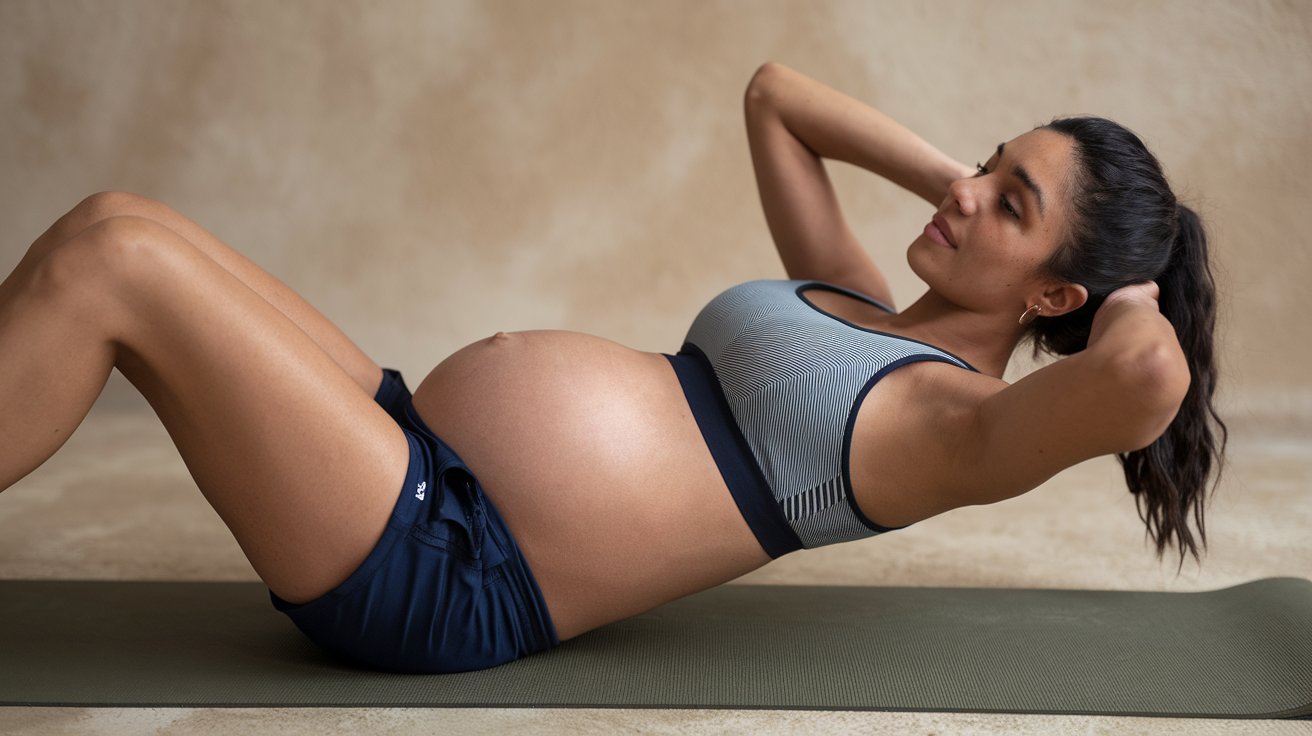
The second trimester is when most pregnant women should significantly modify or stop traditional ab exercises. Around 16-20 weeks, your uterus rises above your pelvic bone, creating increased intra-abdominal pressure during crunching movements. This is the critical period when you should transition away from supine (lying on back) exercises and traditional crunches.
Your expanding belly changes your center of gravity, making balance-challenging exercises riskier. Focus on functional core movements that support your changing posture and prepare your body for labor and delivery. Safe exercises during the second trimester include modified planks against a wall, seated core breathing, and standing pelvic tilts.
Third Trimester Core Exercise Restrictions
By the third trimester, traditional ab exercises should be completely avoided. Your abdominal muscles are maximally stretched, and the risk of diastasis recti increases significantly with traditional crunching movements. The American College of Obstetricians and Gynecologists recommends avoiding supine positions after 20 weeks due to potential compression of the vena cava, which can reduce blood flow to your baby.
Focus on maintaining core stability through functional movements like gentle walking, prenatal yoga, and breathing exercises. Core exercises for the third trimester should emphasize posture support and preparation for labor rather than muscle strengthening. Wall sits, gentle stretching, and pelvic floor exercises are safe alternatives that provide benefits without risks.
Recommended Third Trimester Alternatives
Swimming, prenatal yoga, and walking are excellent low-impact alternatives that maintain overall fitness without stressing your abdominal muscles. These activities support healthy pregnancy outcomes while reducing back pain and improving circulation. Always ensure proper hydration and avoid overheating during exercise sessions.
Preparing for Labor Through Core Work
Focus on pelvic floor strengthening and breathing techniques that will assist during labor and delivery. Diaphragmatic breathing and gentle pelvic tilts help maintain core connection while supporting your body’s preparation for childbirth. These exercises also aid in postpartum recovery by maintaining muscle memory and connection.
At What Point Should You Stop Doing Planks?
Most pregnant women should stop doing traditional floor planks around 16-20 weeks of pregnancy, though this varies based on individual fitness levels and pregnancy progression. Modified planks against a wall or on an incline can be continued longer, typically until 24-28 weeks, provided you don’t experience doming, discomfort, or balance issues.
The key indicator for stopping planks is when you notice your belly “doming” or creating a ridge down the center during the exercise. This indicates excessive intra-abdominal pressure and potential worsening of diastasis recti. Switch to wall planks or eliminate planks entirely if you observe this sign.
Safe Ab Exercise Alternatives Throughout Pregnancy
Pregnancy-safe core exercises focus on maintaining stability and supporting your changing body rather than building traditional muscle strength. Transverse abdominis breathing, glute bridges, and modified squats provide core engagement without the risks associated with traditional ab work. These exercises can be performed throughout pregnancy with appropriate modifications.
Cat-cow stretches, bird dog exercises, and seated marching movements maintain core connection while accommodating your growing belly. These functional movements prepare your body for the physical demands of motherhood while reducing common pregnancy discomforts like back pain and pelvic instability.
Breathing-Based Core Exercises
Diaphragmatic breathing and transverse abdominis activation are fundamental exercises safe throughout pregnancy. These techniques maintain core muscle memory and support pelvic floor function without creating harmful intra-abdominal pressure. Practice these exercises daily to maintain core connection and prepare for postpartum recovery.
Functional Movement Patterns
Incorporate daily movements like squatting, gentle twisting, and posture-supporting exercises that mimic real-life activities. These functional exercises maintain strength and stability while supporting your body through pregnancy’s physical changes. Focus on quality of movement over quantity or intensity.
What Happens to Your Abs After Pregnancy?
Postpartum abdominal recovery varies significantly among women, with most experiencing some degree of diastasis recti that gradually improves over 6-12 months. According to 2024 research, approximately 32% of women still have measurable abdominal separation at 12 months postpartum, though most cases are mild and don’t require surgical intervention.
The key to optimal recovery is avoiding traditional ab exercises until cleared by your healthcare provider, typically 6-8 weeks postpartum for vaginal delivery and 8-12 weeks for cesarean delivery. Premature return to intense ab work can worsen diastasis recti and delay healing. Focus on gentle rehabilitation exercises and professional guidance for best outcomes.
Professional Guidance and Individual Variations
Every pregnancy is unique, making personalized guidance essential for safe exercise decisions. Factors including your pre-pregnancy fitness level, pregnancy complications, multiple pregnancies, and previous diastasis recti history all influence when to stop doing abs during pregnancy. Consult with qualified prenatal fitness specialists and your healthcare provider for individualized recommendations.
Women with high-risk pregnancies, placenta previa, or history of preterm labor may need to stop ab exercises earlier or avoid them entirely. Regular check-ins with your healthcare team ensure your exercise routine remains safe and appropriate throughout your pregnancy journey. Professional prenatal fitness guidance can optimize both maternal health and pregnancy outcomes.
Related video about when to stop doing abs during pregnancy
This video complements the article information with a practical visual demonstration.
FAQ – Common Questions
Can you do crunches 7 weeks pregnant?
Yes, traditional crunches are generally safe at 7 weeks pregnant for most women without complications. However, this is an ideal time to begin learning pregnancy-safe alternatives like breathing exercises and modified planks that you’ll use later in pregnancy. Always consult your healthcare provider about exercise safety during early pregnancy.
Can you do AB workouts in the 3rd trimester?
Traditional ab workouts should be avoided in the third trimester due to maximum abdominal muscle stretching and increased diastasis recti risk. Safe alternatives include breathing exercises, gentle walking, prenatal yoga, and wall-supported exercises. Focus on functional movements that support posture and prepare for labor rather than muscle strengthening.
Is it bad to flex your abs while pregnant?
Gentle ab engagement during daily activities is safe and beneficial throughout pregnancy. However, intense flexing or traditional crunching movements should be avoided after 16-20 weeks. Focus on gentle transverse abdominis activation and breathing exercises that maintain core connection without creating harmful intra-abdominal pressure.
When should I completely stop all core exercises?
You should never completely stop all core work during pregnancy, but rather modify exercises appropriately. Stop traditional ab exercises around 16-20 weeks, but continue safe alternatives like breathing exercises and gentle functional movements throughout pregnancy. Complete cessation of core work can lead to weakened muscles and increased postpartum recovery time.
What are signs I should stop doing planks immediately?
Stop planks immediately if you notice abdominal doming, feel dizzy, experience shortness of breath, or have any pelvic pressure or discomfort. Visual coning down the center of your abdomen indicates excessive pressure and potential diastasis recti worsening. Switch to wall planks or eliminate planks entirely when these signs appear.
How do I know if I have diastasis recti during pregnancy?
Check for diastasis recti by lying on your back with knees bent, gently lifting your head, and feeling for a gap wider than two finger-widths above or below your navel. You may also notice a ridge or doming when engaging your abs. Most women develop some separation during pregnancy, but severe cases require modified exercises and professional guidance.
| Pregnancy Stage | Safe Ab Exercises | Exercises to Avoid |
|---|---|---|
| First Trimester (0-12 weeks) | Modified crunches, planks, breathing exercises | High-intensity ab work if experiencing nausea |
| Second Trimester (13-27 weeks) | Wall planks, standing exercises, pelvic tilts | Traditional crunches after 16-20 weeks |
| Third Trimester (28+ weeks) | Breathing exercises, gentle stretching, walking | All traditional ab exercises, supine positions |