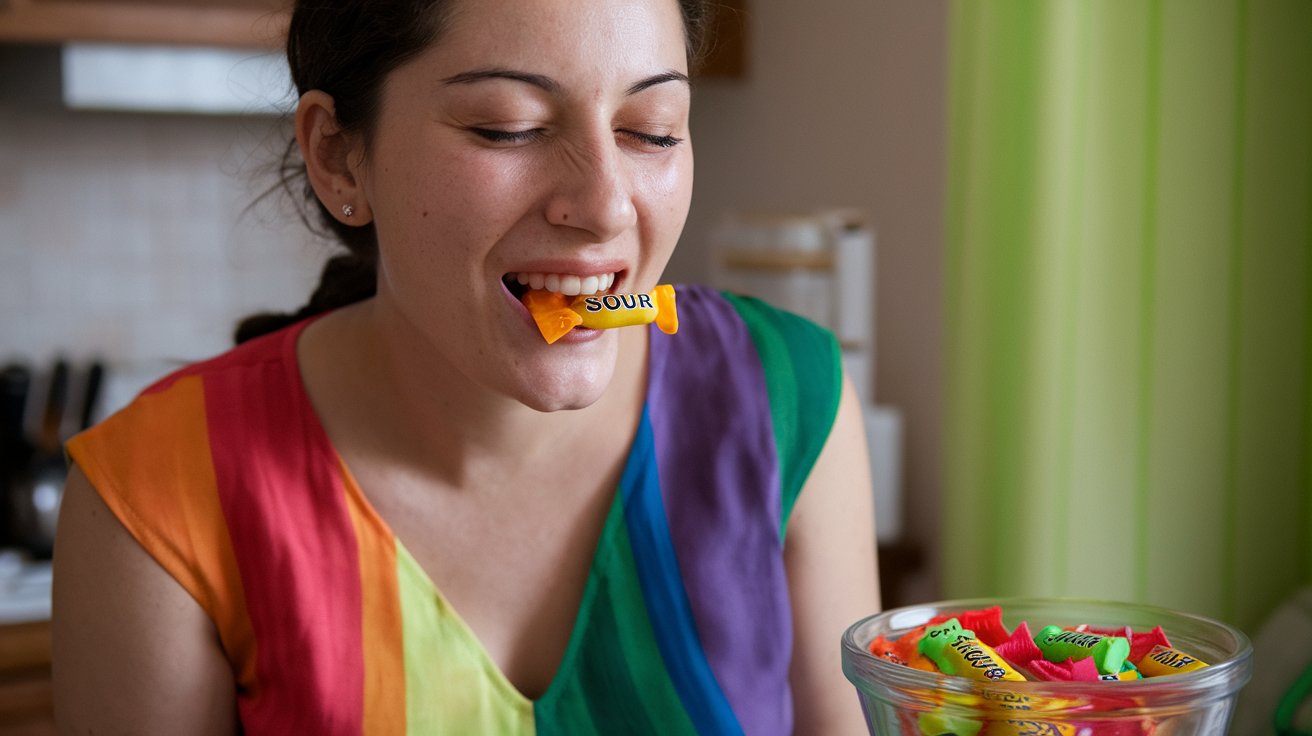
Many pregnant women crave sour candy during pregnancy, and the good news is that most sour candies are safe to eat in moderation. While your taste buds may be driving these cravings, understanding which sour candies are safe and how much you can consume is crucial for both you and your baby’s health.
Is Sour Candy Safe During Pregnancy?
Yes, eating sour candy while pregnant is generally safe when consumed in moderation. Most commercial sour candies contain citric acid, sugar, and artificial flavors that pose no significant risk to pregnant women. However, the key is portion control and choosing reputable brands that follow FDA safety guidelines established in 2024.
The American College of Obstetricians and Gynecologists confirms that occasional candy consumption during pregnancy is acceptable as part of a balanced diet. The main concerns arise from excessive sugar intake rather than the sour components themselves, making moderation essential for maintaining healthy blood sugar levels throughout your pregnancy.
Does Sour Candy Help with Morning Sickness?
Many pregnant women find that sour candy helps with morning sickness symptoms, particularly during the first trimester. The tartness can stimulate saliva production and help settle an upset stomach. Research from 2024 suggests that sour flavors may trigger the vagus nerve, which can reduce nausea sensations in some pregnant women.
Common sour candies like lemon drops, sour gummies, and citrus-flavored hard candies are frequently recommended by healthcare providers as a natural remedy for morning sickness relief. The quick sugar boost can also help combat the fatigue that often accompanies early pregnancy nausea, making sour candy a practical choice for expectant mothers.
Best Sour Candies for Morning Sickness
Hard sour candies work best for nausea relief during pregnancy because they dissolve slowly and provide sustained flavor. Lemon drops, sour apple hard candies, and ginger-infused sour varieties are particularly effective. Avoid extremely sour candies with high acid content, as these may worsen heartburn, which affects 70% of pregnant women according to 2024 statistics.
When to Use Sour Candy for Nausea
The most effective time to consume sour candy for morning sickness is at the first sign of nausea, typically upon waking or before meals. Keep a small supply by your bedside to combat early morning queasiness. Healthcare providers recommend limiting intake to 2-3 pieces per episode to avoid excessive sugar consumption while still obtaining nausea relief benefits.
Why You’re Craving Sour Candy During Pregnancy
Pregnancy cravings for sour foods during pregnancy are incredibly common and have several scientific explanations. Hormonal changes, particularly increased estrogen and progesterone levels, can alter taste preferences and make sour flavors more appealing. Additionally, your body may crave the quick energy that sour candy provides during pregnancy’s increased metabolic demands.
Research indicates that sour cravings in pregnancy may also be linked to your body’s need for certain nutrients. The citric acid in sour candy can enhance iron absorption, which is crucial during pregnancy when iron requirements increase by 50%. Some studies suggest that craving sour foods might indicate a need for more vitamin C or other acidic nutrients essential for fetal development.
Hormonal Influences on Taste
Pregnancy hormones significantly impact taste perception, often making sour flavors more appealing than sweet ones. The hormone hCG, which peaks during the first trimester, can cause taste changes that make expectant mothers prefer tart, acidic foods. This biological response may explain why many women suddenly crave sour candy even if they didn’t enjoy it before pregnancy.
Nutritional Signals Behind Cravings
Your body may be signaling specific nutritional needs through sour candy cravings during pregnancy. The desire for acidic foods could indicate low stomach acid levels, which are common in pregnancy due to hormonal changes. Additionally, craving citrus-flavored sour candies might suggest your body needs more vitamin C, essential for collagen formation and immune system support during pregnancy.
First Trimester Sour Candy Consumption
During the first trimester, sour candy consumption should be carefully monitored due to increased sensitivity to blood sugar fluctuations. While small amounts can help with morning sickness, the developing fetus is particularly vulnerable to excessive sugar intake during weeks 1-12. Limit consumption to 1-2 servings per day, with each serving being approximately 3-4 small pieces.
Healthcare providers recommend choosing sour candies with lower sugar content during the first trimester. Sugar-free options with natural sweeteners like stevia or erythritol are increasingly available and can provide the sour taste without the blood sugar spikes. Always consult your healthcare provider about candy consumption if you have any pregnancy complications or risk factors.
Second and Third Trimester Considerations
As you progress into the second and third trimesters, sour candy consumption requires different considerations. The risk of gestational diabetes increases, particularly after week 24, making blood sugar management more critical. While moderate sour candy consumption remains safe, you should be more vigilant about portion sizes and frequency of consumption.
During the third trimester, heartburn becomes more common due to the growing baby pressing against your stomach. Highly acidic sour candies may exacerbate these symptoms, so choosing milder sour options or consuming them with food can help minimize discomfort. Focus on candies with lower acidity levels and avoid consuming them close to bedtime.
Gestational Diabetes Concerns
If you develop gestational diabetes, which affects 6-9% of pregnancies according to 2024 CDC data, sour candy consumption requires strict limitation. Sugar-free alternatives become essential, and you should monitor blood glucose levels closely after consuming any candy. Work with your healthcare team to develop a safe consumption plan that satisfies cravings without compromising blood sugar control.
Managing Late Pregnancy Symptoms
In the third trimester, sour candy can help with specific symptoms beyond nausea. The quick energy boost can combat pregnancy fatigue, while the stimulating taste may help with decreased appetite. However, prioritize nutrient-dense snacks and use sour candy only as an occasional treat to ensure optimal nutrition for fetal growth and development.
Candy to Avoid During Pregnancy
While most sour candies are safe, certain types should be avoided during pregnancy. Extremely sour candies with high citric acid content can damage tooth enamel and worsen pregnancy-related dental issues. Candies containing artificial colors like Red Dye 40 or Yellow 6 should also be limited, as some studies suggest potential links to hyperactivity in children.
Imported sour candies may contain unsafe ingredients or contaminants not regulated by the FDA. Stick to well-known brands manufactured in the United States or other countries with strict food safety standards. Additionally, avoid any candy containing alcohol-based flavorings, herbal extracts, or excessive amounts of caffeine, which can be harmful during pregnancy.
Healthy Alternatives to Sour Candy
For pregnant women seeking healthier sour alternatives, natural options provide similar taste satisfaction with better nutritional value. Fresh citrus fruits, pickles, and yogurt with lemon can satisfy sour cravings while providing essential nutrients. Frozen fruit popsicles made with real fruit juice offer a refreshing sour taste without artificial additives.
Homemade sour gummies using natural fruit juices and gelatin allow you to control sugar content and avoid artificial ingredients. Probiotic sour foods like kefir or kombucha (low-alcohol varieties) can provide beneficial bacteria for digestive health while satisfying cravings. These alternatives support both maternal and fetal health while managing pregnancy cravings effectively.
Related video about can i eat sour candy while pregnant
This video complements the article information with a practical visual demonstration.
FAQ – Common Questions
Can I have sour candy when pregnant during all trimesters?
Yes, you can safely consume sour candy during all trimesters of pregnancy in moderation. However, portion control becomes more important as pregnancy progresses, especially after week 24 when gestational diabetes risk increases. Limit intake to 1-2 servings daily and choose lower-sugar options when possible.
What candy should I avoid during pregnancy?
Avoid extremely sour candies with high citric acid content, imported candies without FDA oversight, and those containing excessive artificial colors or alcohol-based flavorings. Also limit candies with high sugar content if you have gestational diabetes or are at risk for developing it.
Why do girls eat sour things during pregnancy?
Pregnancy hormones, particularly estrogen and hCG, alter taste preferences making sour flavors more appealing. Additionally, sour foods may help with nausea relief and could signal the body’s need for nutrients like vitamin C or indicate low stomach acid levels common in pregnancy.
Is sour candy during pregnancy a boy or girl indicator?
No scientific evidence supports the myth that craving sour foods indicates the baby’s gender. Sour cravings during pregnancy are caused by hormonal changes and nutritional needs, not the baby’s sex. This is purely an old wives’ tale with no medical basis.
How much sour candy is safe during pregnancy?
Healthcare providers generally recommend limiting sour candy to 1-2 servings per day, with each serving being 3-4 small pieces. This amount provides craving satisfaction and potential nausea relief without excessive sugar intake that could affect blood glucose levels or contribute to excessive weight gain.
Can sour candy help with pregnancy morning sickness?
Yes, many pregnant women find sour candy effective for morning sickness relief. The tartness stimulates saliva production and may trigger the vagus nerve to reduce nausea. Hard sour candies work best as they dissolve slowly and provide sustained relief, especially when consumed at the first sign of nausea.
| Pregnancy Stage | Safe Daily Amount | Key Benefits |
|---|---|---|
| First Trimester | 3-4 small pieces | Morning sickness relief |
| Second Trimester | 4-6 small pieces | Energy boost, craving satisfaction |
| Third Trimester | 2-4 small pieces | Appetite stimulation, fatigue relief |