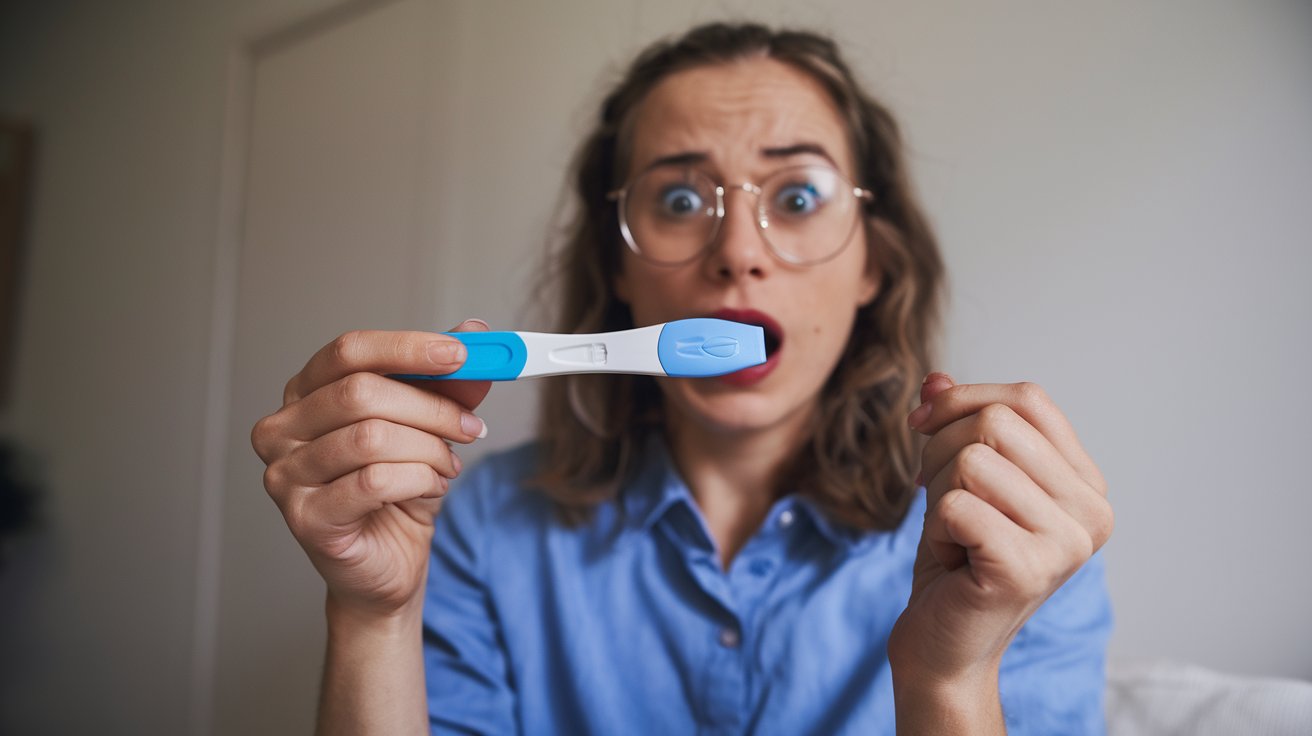
While ovulation tests can detect pregnancy in some cases, they work differently than dedicated pregnancy tests. Understanding how these tests interact with pregnancy hormones can help you interpret results accurately and know when to use each type of test for the most reliable information about your reproductive status.
Can an Ovulation Test Detect Early Pregnancy?
Yes, ovulation tests can sometimes detect pregnancy because both tests respond to similar hormone structures. Luteinizing hormone (LH) detected by ovulation tests shares molecular similarities with human chorionic gonadotropin (hCG), the pregnancy hormone. This cross-reactivity means that rising hCG levels during early pregnancy may trigger a positive result on an ovulation test, though this isn’t the test’s intended purpose.
However, relying on ovulation tests for pregnancy detection isn’t recommended as a primary method. The sensitivity levels differ significantly, and false negatives are common. Studies from 2024 show that ovulation tests detect pregnancy accurately only about 60-70% of the time compared to 99% accuracy rates for dedicated pregnancy tests when used correctly.
Why Ovulation Tests Show Positive Results During Pregnancy
The science behind why ovulation tests detect pregnancy hormones lies in molecular structure similarities between LH and hCG. Both hormones share an identical alpha subunit, which ovulation test antibodies can recognize. When hCG levels rise during early pregnancy, typically starting around 6-12 days after conception, they can cross-react with ovulation test strips designed to detect LH surges.
This cross-reactivity becomes more pronounced as pregnancy progresses and hCG levels increase. By week 4-5 of pregnancy, hCG concentrations often reach levels high enough to consistently trigger positive ovulation test results. However, the intensity and reliability of these positive results vary significantly between different ovulation test brands and individual hormone level variations.
Key Differences Between Ovulation and Pregnancy Tests
Ovulation tests and pregnancy tests serve distinctly different purposes despite their similar appearance. Ovulation tests detect LH surges that occur 24-36 hours before ovulation, helping predict fertile windows for conception. These tests typically have higher threshold levels for positive results, requiring stronger hormone concentrations to display positive lines.
Pregnancy tests, conversely, are specifically designed to detect hCG with much higher sensitivity. Modern pregnancy tests can detect hCG levels as low as 10-25 mIU/mL, while ovulation tests require significantly higher hormone concentrations. This difference in sensitivity explains why pregnancy tests provide more reliable early pregnancy detection than ovulation tests used for the same purpose.
Understanding Two Lines on Ovulation Tests During Pregnancy
When you see two lines on an ovulation test while pregnant, it typically indicates hormone cross-reactivity rather than ovulation. During pregnancy, rising hCG levels can create strong positive lines on ovulation tests, sometimes appearing darker than typical LH surge results. This phenomenon is particularly common during the first trimester when hCG levels are rapidly increasing.
The appearance of two lines on ovulation tests during pregnancy doesn’t indicate fertility or ovulation timing, as ovulation ceases during pregnancy due to hormonal changes. Instead, these results reflect the test’s inability to distinguish between LH and hCG molecules, leading to false positive ovulation readings that actually indicate pregnancy hormone presence.
Interpreting Faint Lines on Ovulation Tests When Pregnant
A faint line on an ovulation test could indicate pregnancy, especially if you’ve missed your expected period or are experiencing early pregnancy symptoms. Faint positive lines often appear when hCG levels are still relatively low but sufficient to trigger the test’s antibodies. These faint results typically occur during very early pregnancy, around 8-14 days after conception.
However, interpreting faint lines on ovulation tests requires caution, as they can also indicate approaching ovulation, recent ovulation, or certain medications. The key is considering timing and context. If you’re expecting your period or trying to conceive, a faint positive ovulation test combined with other pregnancy signs warrants follow-up with a dedicated pregnancy test for confirmation.
When Ovulation Tests Would Be Negative If Pregnant
Contrary to common belief, ovulation tests can be negative during pregnancy, particularly in very early stages or with certain test sensitivities. If hCG levels haven’t risen sufficiently to trigger the ovulation test’s antibodies, results will appear negative despite pregnancy. This commonly occurs within the first week after conception when hCG levels remain below the test’s detection threshold.
Additionally, some ovulation test brands have higher specificity for LH, making them less likely to cross-react with hCG. These tests would show negative results even when pregnant, which is why ovulation tests aren’t reliable pregnancy indicators. Individual hormone variations also affect results, as some women produce lower initial hCG levels that don’t register on ovulation test strips.
Timing Guidelines for Ovulation and Pregnancy Testing
Understanding when to use each test type is crucial for accurate results. Ovulation tests should be used daily starting around day 10-11 of your menstrual cycle, continuing until you detect an LH surge. Testing typically occurs between 10 AM and 8 PM, avoiding first morning urine which may dilute LH concentrations and affect accuracy.
For pregnancy testing, wait until at least the first day of your missed period for most accurate results. Early pregnancy tests can detect pregnancy as early as 6-8 days before your missed period, but accuracy improves significantly when used after the missed period date. If using ovulation tests to detect pregnancy, wait at least 10-14 days after suspected conception for more reliable cross-reactivity results.
Clearblue and Other Brand Considerations
Clearblue ovulation tests and pregnancy detection capabilities vary based on specific product formulations. Clearblue Advanced Digital Ovulation Tests use dual hormone monitoring (LH and estrogen), which may affect pregnancy hormone cross-reactivity differently than single-hormone tests. Some users report that Clearblue ovulation tests show positive results during pregnancy, while others experience negative results.
Different ovulation test brands have varying sensitivities and antibody specificities, affecting their likelihood of detecting pregnancy hormones. Generic test strips often show higher cross-reactivity with hCG compared to brand-name tests with more specific LH antibodies. When choosing ovulation tests for any pregnancy detection purpose, remember that dedicated pregnancy tests remain the gold standard for accuracy and reliability.
What to Do With Missed Period and Conflicting Results
If you experience a missed period with positive ovulation test but negative pregnancy test, several factors could explain this discrepancy. Ovulation tests may detect rising hCG levels before pregnancy tests reach their sensitivity threshold, or the positive ovulation result could indicate a delayed ovulation rather than pregnancy. Timing differences in test sensitivity often create these confusing scenarios.
Wait 2-3 days and retest with both types of tests, or consult healthcare providers for blood hCG testing. Blood tests detect pregnancy hormones earlier and more accurately than home tests. Additionally, consider that missed periods can result from factors other than pregnancy, including stress, hormonal imbalances, medication changes, or underlying health conditions that affect menstrual regularity.
Scientific Evidence and Research Findings
Recent research from 2024 published in reproductive health journals confirms that ovulation tests can detect pregnancy with moderate reliability due to LH-hCG cross-reactivity. Studies involving over 1,000 women showed that ovulation tests detected pregnancy correctly in 65% of cases during early pregnancy stages, with accuracy improving to 80% after week 5 of pregnancy.
However, the same research emphasized that dedicated pregnancy tests remain superior for pregnancy detection, showing 99% accuracy when used correctly after missed periods. False negative rates for ovulation tests used as pregnancy indicators reached 35%, significantly higher than the 1-3% false negative rate for proper pregnancy tests. These findings reinforce recommendations to use appropriate tests for their intended purposes.
Common Mistakes and How to Avoid Them
One frequent error is relying solely on ovulation test results for pregnancy confirmation without follow-up testing. While positive ovulation tests during expected pregnancy periods can indicate conception, they shouldn’t replace proper pregnancy testing methods. Always confirm suspected pregnancy with dedicated pregnancy tests or medical evaluation for definitive results.
Another common mistake involves misinterpreting test timing and results. Remember that ovulation tests detect LH surges, not pregnancy directly. If you’re trying to conceive and see persistent positive ovulation tests beyond your expected ovulation window, consider pregnancy as a possibility, but verify with appropriate testing methods. Maintaining detailed cycle tracking helps distinguish between ovulation patterns and potential pregnancy indicators.
Related video about ovulation test can detect pregnancy
This video complements the article information with a practical visual demonstration.
Key Questions and Answers
Can ovulation tests detect pregnancy before pregnancy tests?
Sometimes ovulation tests can detect pregnancy slightly before dedicated pregnancy tests due to hormone cross-reactivity. However, this isn’t reliable since ovulation tests aren’t designed for pregnancy detection and have higher threshold levels. Pregnancy tests remain more accurate and sensitive for early pregnancy detection, with false negative rates significantly lower than ovulation tests used for pregnancy purposes.
Will an ovulation test get darker if I’m pregnant?
Yes, ovulation tests often get darker during pregnancy as hCG levels increase. The rising pregnancy hormone can trigger stronger positive results on ovulation tests throughout the first trimester. However, this darkening isn’t a reliable pregnancy indicator since ovulation test sensitivity varies by brand, and dedicated pregnancy tests provide more accurate results for confirming pregnancy status.
What does a positive ovulation test look like if you’re already pregnant?
A positive ovulation test during pregnancy typically shows two distinct lines, with the test line often appearing as dark as or darker than the control line. Unlike normal ovulation surges that last 24-48 hours, pregnancy-related positive ovulation tests persist for days or weeks due to continuously rising hCG levels mimicking LH hormone structure.
Should I use ovulation tests as pregnancy tests?
No, you shouldn’t rely on ovulation tests for pregnancy detection. While they may sometimes detect pregnancy due to hormone similarities, they’re designed for ovulation prediction with different sensitivity levels. Pregnancy tests are specifically formulated to detect hCG accurately and provide 99% reliability when used correctly, compared to 60-70% accuracy for ovulation tests detecting pregnancy.
Why is my ovulation test positive but pregnancy test negative?
This can occur when hCG levels are high enough to trigger ovulation test antibodies but below pregnancy test thresholds, or during very early pregnancy stages. It could also indicate delayed ovulation rather than pregnancy. Wait 2-3 days and retest with both types, or consult healthcare providers for blood testing to determine your actual pregnancy status accurately.
Can ovulation tests give false pregnancy results?
Yes, ovulation tests can give both false positive and false negative pregnancy results. False positives occur due to LH-hCG cross-reactivity, while false negatives happen when hCG levels are too low to trigger the test or when tests have high LH specificity. This 35% false negative rate for pregnancy detection makes ovulation tests unreliable pregnancy indicators compared to dedicated pregnancy tests.
| Test Aspect | Ovulation Test | Pregnancy Test |
|---|---|---|
| Primary Purpose | Detects LH surge for ovulation timing | Detects hCG for pregnancy confirmation |
| Pregnancy Detection Accuracy | 60-70% due to cross-reactivity | 99% when used correctly |
| Best Testing Time | Mid-cycle, avoid first morning urine | After missed period, first morning urine |
| Cost Effectiveness | More expensive for pregnancy detection | Most cost-effective for pregnancy testing |
| Reliability Factor | Moderate for unintended pregnancy use | High for intended pregnancy detection |